Jianjing and Yongquan
Both are important acupuncture points, and in Tai Chi they have a useful structural/body-awareness interpretation beyond their traditional medical descriptions.
Jianjing — 肩井 (GB21)
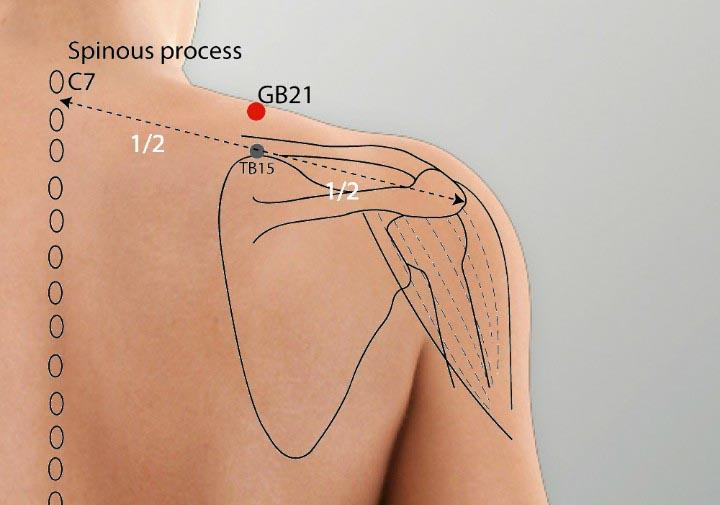
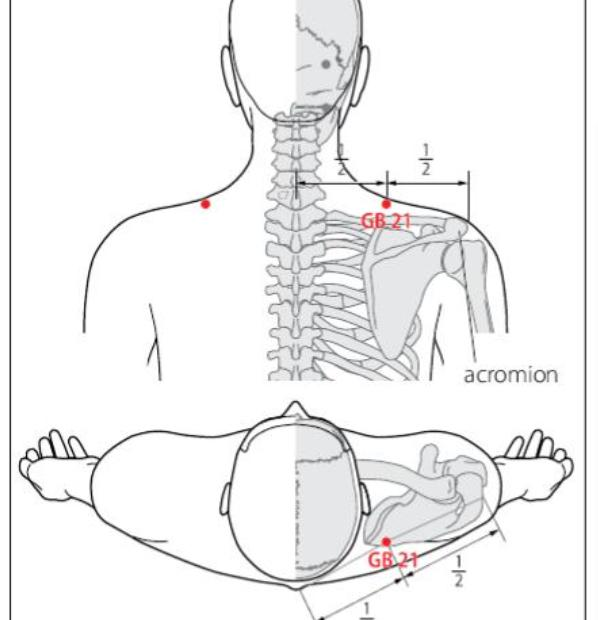
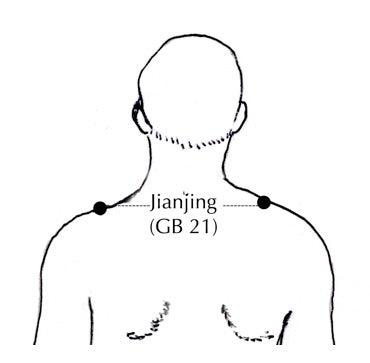
Jianjing (肩井) literally means "Shoulder Well."
- Chinese: 肩井
- Pinyin: Jiānjǐng
- Acupuncture designation: GB21 — Gallbladder meridian
- Location: roughly at the highest point of the trapezius muscle, midway between the base of the neck and the lateral end of the shoulder.
In Tai Chi terminology, this is a particularly interesting location because it is associated with releasing the shoulders downward.
When you hear:
沉肩 — Chén jiān — "sink the shoulders"
one useful way of experiencing it is to allow the area around Jianjing to soften and descend.
Importantly, "sink" does not mean force the shoulders downward. If you actively push them down, you create tension—the opposite of song (鬆).
Instead:
Crown rises → Jianjing releases → shoulders settle → elbows become heavy.
That creates a very characteristic Tai Chi structural relationship.
Yongquan — 湧泉 (KI1)
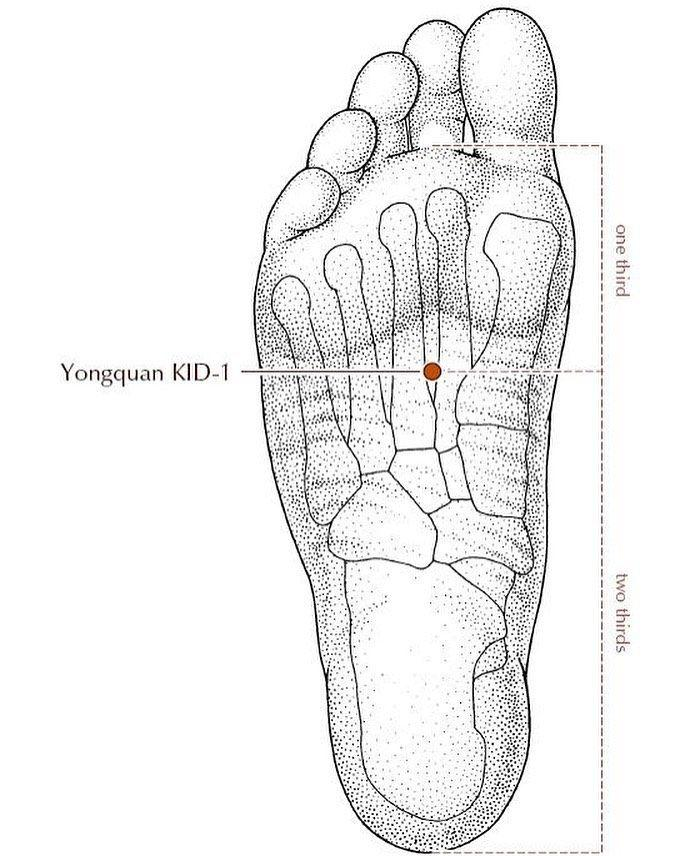
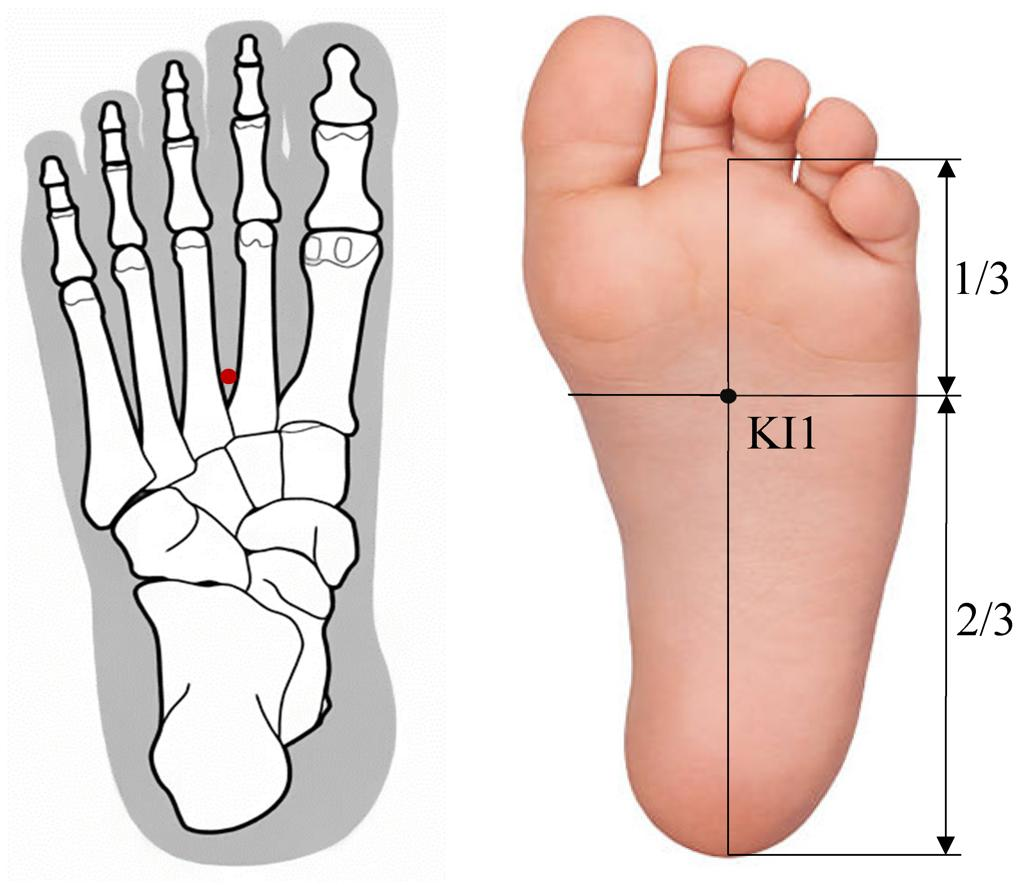
Yongquan (湧泉) means "Gushing Spring" or "Bubbling Spring."
- Chinese: 湧泉
- Pinyin: Yǒngquán
- Acupuncture designation: KI1 — Kidney 1, the first point of the Kidney meridian
- Location: on the sole of the foot, approximately in the depression in the upper/middle portion of the sole, between the second and third metatarsal regions.
The name is wonderfully evocative: a spring rising from the earth.
In Tai Chi, Yongquan is often used as an image for rooting.
But again, rooting doesn't mean pressing the feet into the floor.
Rather:
The foot receives the ground.
The weight settles through the leg into the foot, while the body remains sufficiently relaxed that the foot can continuously adapt.
There is also a very elegant vertical relationship:
Baihui (百会)
Crown of the head
⬆️
Jianjing (肩井)
Shoulder releases
⬇️
Dantian (丹田)
Center / integration
⬇️
Yongquan (湧泉)
Root / ground
You could think of the Tai Chi body as having two simultaneous tendencies:
The crown rises.
The feet sink.
And between them the body becomes suspended rather than compressed.
This is why the traditional instruction 虚领顶劲 — xū lǐng dǐng jìn ("empty/spiritually lift the crown") is so important. The upward and downward vectors create a kind of dynamic suspension.
And this gives us a particularly nice way of understanding the earlier "One Crown, Three Voids" idea:
- Crown: light upward suspension
- Shoulder/armpit region: open and released
- Palms: empty/receptive
- Soles/Yongquan: rooted but not gripping
The result is not a rigid vertical column. It is more like a tree: roots downward, crown upward, and the trunk remains alive and responsive.
One small qualification: the exact location and interpretation of these points can vary somewhat among acupuncture and Tai Chi lineages. So I'd regard the descriptions above as traditional body-mapping concepts, rather than precise anatomical structures.